
Kennedy Crossing and Victoria Place
North Chicago
Lake County
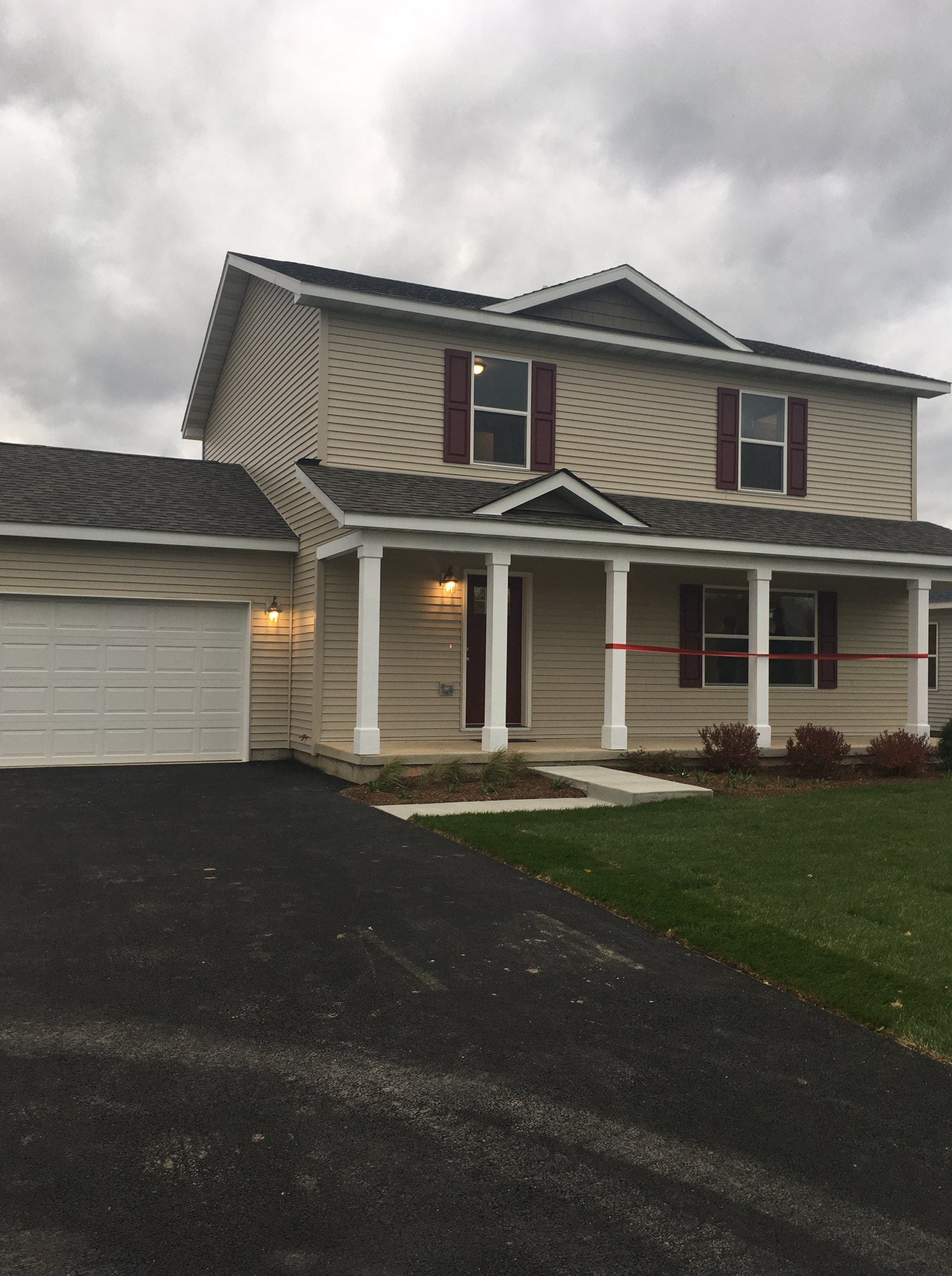
Photo courtesy of BRicK Partners
The Development
At the height of the foreclosure crisis, when vacant and abandoned properties were destroying communities and struggling households had trouble accessing stable and affordable housing, the City of North Chicago donated nine parcels of land to a local nonprofit developer as part of a broader neighborhood stabilization effort. Developed by Lake County Residential Development Corporation (LCRDC) and its funded team partner Affordable Housing Corporation of Lake County (AHC), both of which have since merged into the Community Partners for Affordable Housing (CPAH), the Kennedy Crossing and Victoria Place development consists of three components: eight modularly constructed 1- and 2-story single-family homes; the construction of four new modular townhomes that serve as permanent supportive housing for veterans that are homeless or at risk of homelessness; and the rehabilitation of one six-unit apartment building and two foreclosed single-family homes into 8 quality rentals.
The single-family modular homes are constructed in a classic ranch-style, complementary to the surrounding neighborhood; each with 3 beds and 2.5 baths and an attached 2-car garage, ranging in size from 1,200 to 1,500 square feet of living space. The buyers were provided homebuyer counseling services through AHC and were eligible for $3,500 in down payment and closing cost assistance. Constructed off-site, each modular home was delivered and “set” on their lots with minimal disturbance to the surrounding community, taking a fraction of the time that home construction typically takes. The homes are located within walking distance of the local high school, middle school, elementary school, city hall, local bike paths, a public library, a large park, a forest preserve, and a commercial corridor.
The Victoria Place veteran townhomes, also modularly constructed and “set” on their lots, are a one-story, townhome-style building that offers four permanent supportive apartments to veterans either experiencing homelessness or at risk of homelessness and referred to LCRDC by the local VA. Spanning roughly five lots located in the middle of a residential block of primarily single-family homes, each apartment has a front porch that sits behind generous front lawns with pollinator gardens, blending beautifully into the existing neighborhood fabric. Each townhouse features fully equipped kitchens and generous living spaces, offering formerly homeless veterans the basic dignity of a clean, safe, and modern living space.
With a variety of funding sources and housing types, CPAH was able to work with North Chicago to create a range of sustainable housing solutions where vacant and abandoned properties were previously undermining neighborhood stability.
Despite several market barriers and unanticipated costs, such as higher-than-anticipated contractor bids which resulted in the decision to utilize modular housing, all objectives of the development were completed. The eight Kennedy Crossing single-family homes were all sold shortly after their construction, and the four veteran townhomes were all quickly filled with veterans at risk of homelessness who were provided VASH vouchers by the Veterans Affairs and support services from the Homeless Coalition of Lake County. Between the three sites, 20 affordable, high-quality housing options were created for low-income households in an area whose housing stock had been decimated by the effects of the foreclosure crisis.
When unanticipated material costs threatened the financial feasibility of this effort in the pre-development phase, a pivot by LCDC to modular construction not only allowed the work to continue but also demonstrated that manufactured homes can be high-quality in both their visual appeal and their durability, contributing to the vibrancy of the existing neighborhoods. Further flexibility was provided by the one-time funding opportunity created through the Office of the Attorney General’s National Foreclosure Settlement Grant, addressing a critical funding gap while allowing local partners to address local needs in a variety of ways.
Goal
In a city where 65% of households at the time were renters, the objectives of this initiative were to build 8 new affordable single-family homes for ownership, four new supportive rental townhomes for veterans, and to renovate a six-unit vacant and foreclosed apartment building and two single-family homes into high quality affordable rental housing.
Target
The eight new single-family homes were made available to households with annual incomes between 50% and 80% of the Area Median Income (AMI), with a preference for people already living or working in North Chicago. The homes in the renovated apartment building were made available as affordable rentals for lower income households, and the four Victoria Place veteran townhomes are reserved for U.S. veterans homeless or at risk of homelessness and referred by the Veterans Affairs (VA).
Financing
With a total budget of roughly $4.3 million, financing included:
- $1.5 million award from the Attorney General National Foreclosure Settlement Awards
- Lake County HOME grant of $815,000
- Lake County NSP grant of $340,048
- $152,000 from the Federal Home Loan Bank of Chicago
- $320,000 from the IHDA Trust Fund
- IHDA State Donation Tax Credit of approximately $160,000
- 9 parcels donated by the city
- Waived permit fees
- Discounted price of foreclosed properties owned by First Midwest Bank
Success
The development not only responded to the demand for this type of housing but also catalyzed additional private investment, as the city has noted that the creation of affordable housing options has led to an increase in the development of market-rate housing.
Lessons Learned
The affordability and flexibility of modular construction provide a time- and cost-effectiveness that can be a replicable and scalable tool for the development of not only affordable multifamily apartments, but also affordable single-family homes.
Contact Information
Community Partners for Affordable Housing, www.cpahousing.org
This case study was last updated in February 2026.
See More Case Studies
Home Grown is a collection of housing best practices implemented by local governments across the seven-county Chicago region. Each case study covers a housing policy, development, or program; how it works; why it was successful; and how it was funded. To see the full collection of case studies, click on the Home Grown logo.