
Why Focus on Residential Energy Use?
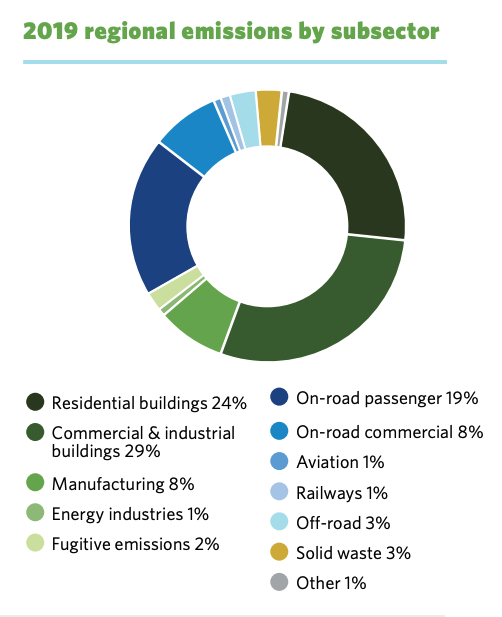 As part of developing the Priority Climate Action Plan (PCAP) in 2024, the Metropolitan Mayors Caucus identified residential buildings as a major source of greenhouse gas (GHG) emissions in the Chicago region, at roughly a quarter of the emissions across sectors.
In addition to the environmental impact of buildings a growing concern is the energy burden faced by many households—especially during and after the pandemic. Energy burden refers to the percentage of household income spent on energy costs. According to the American Council for an Energy-Efficient Economy (ACEEE), energy costs under 6% of gross income are considered affordable. Households spending more than 6% face a “high energy burden,” and those above 10% experience a “severe energy burden.” In Illinois, low-income families spend an average of 13% of their income on energy, according to a study conducted by Elevate. This can force difficult choices between paying utility bills and covering essentials like medicine or food.
Recognizing these challenges and the opportunity for impact, the Caucus turned its attention to the residential sector to explore ways municipalities could help their constituents reduce emissions and energy costs.
A Comprehensive Educational Toolkit For Your Community
The Caucus has developed a one-stop resource to help municipalities support residents with energy efficiency education and outreach. This toolkit includes ready-to-use materials designed to:
- Improve energy literacy across the region
- Assist households facing higher energy burdens, including low-income families and older adults
- Raise awareness of energy efficiency, utility assistance, and renewable energy programs
How You Can Help
Share these resources through your community’s communication channels and events. Featured tools include:
- Energy Efficiency Games and Activities
- Residential Energy Efficiency and Assistance Programs
- Educational Resources
About the Metropolitan Mayors Caucus’ Energy Efficiency Efforts
The Metropolitan Mayors Caucus is committed to helping municipalities and their constituents save energy and reduce costs through education and outreach.
2020–2021: Promoting Energy Literacy
 With grant funding from the Illinois Science & Energy Innovation Foundation (ISEIF), the Caucus supported municipalities in educating residents about energy use and savings.
2023: Expanding Access to Free Home Energy Savings
The Caucus partnered with Resource Innovations to promote the ComEd, Nicor Gas, Peoples Gas, and North Shore Gas Home Energy Savings Program. This free program helps residents:
- Lower monthly utility bills
- Reduce energy burden
- Cut carbon emissions
- Improve local housing stock
2024–2025: Community Outreach Expansion
Outreach began in nine utility-selected communities in 2024 and expanded to 33 communities in 2025. The Caucus uses a variety of outreach methods to connect with residents, including:
- Municipal social media posts
- Newsletters and website updates
- Tabling at resource fairs and community events
- Presentations and workshops
Supporting Regional Sustainability Goals
These efforts support the Caucus’ broader goals of energy equity, sustainability, and community engagement. The Greenest Region Compact (GRC) goal to “engage the community in clean energy practices” outlines the specific tactics:
- E30: Partner with utilities to promote energy efficiency programs to the community
- E33: Collaborate to educate the community about clean energy options