
Emma’s Landing
Geneva
Kane County
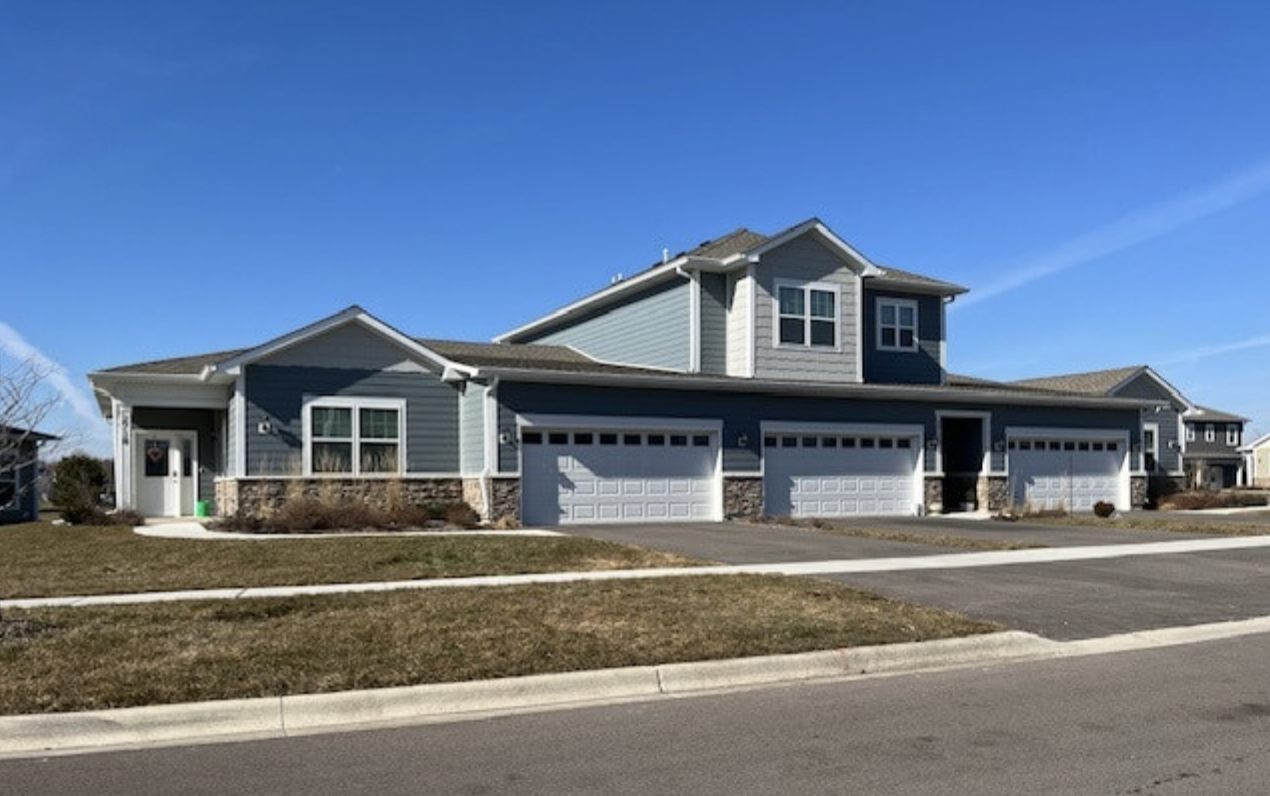
Photo courtesy of The Burton Foundation
The Development
In 2014, the city of Geneva participated in the Metropolitan Mayors Caucus’ Homes for a Changing Region (HCR) program, which created a plan for the city to increase its supply of affordable housing to reach the 10% threshold required to be compliant with Illinois’ Affordable Housing Planning and Appeals Act (AHPAA). The plan outlined several strategy recommendations on how Geneva could create the 363 housing options needed to reach the 10% threshold. Two of the primary recommendations were an amendment to the city’s zoning ordinance that allowed for higher density in key areas, and an inclusionary housing ordinance; both of which were acted upon by the City. In 2020, Geneva adopted an official affordable housing plan that identified several parcels in the City that had potential for affordable housing development, including a vacant 7.75-acre plot of land wedged between Union Pacific railroad tracks and the Sterling Manor subdivision.
Originally a part of the 1991 Sterling Manor Planned Unit Development (PUD) and envisioned as the site of a new public water treatment facility, the land was left defunct when the City decided to build the water treatment facility in a different location. In 2013, seeking to bring this land back into productive use, Geneva amended the Sterling Manor PUD ordinance to allow for the vacant land’s sale and development. After receiving no sale interest in 2013, the property was taken off the market until 2019. Momentum returned in March 2020, when the Burton Foundation- an Illinois-based non-profit affordable housing developer- submitted a proposal for the transformation of the site into a 45-unit, townhome-style affordable housing development called Emma’s Landing. After all was official, ground was broken in summer 2021 and doors opened in May 2023.
Designed by Allen+Pepa Architects and constructed by Door Creek Construction, Emma’s Landing consists of 45 all-affordable rental units across twelve townhome “pods”, including eight units accessibly designed for people with disabilities. Nine of the townhomes consist of four-units and three consist of three-units. Of those units, 30 are 3-bedroom/2.5-bathroom and average 1,250 sq. ft., while the other 15 units are 2-bedroom/2-bathroom units and average 950 sq. ft. Of the 2-bedroom/2-bathroom apartments, eight are reserved for households with incomes up to 30% of the Area Median Income (AMI), two are reserved for households earning up to 50% AMI, and five are reserved for households earning up to 80% AMI. Of the 3-bedroom/2.5-bathroom apartments, six are reserved for households earning up to 30% AMI, 11 are reserved for households earning up to 50% AMI, and 13 are reserved for households earning up to 80% AMI. Amenities for each unit include a two-car garage, patio space, in-unit laundry, and modern appliances, as well as dedicated visitor parking and a community playground.
Soon after its opening, The Burton Foundation organized an Open House, which inspired neighbors to meet the newest residents and helped all parties feel more connected. A great success, the Open House even inspired some former opponents of the development to contact the Mayor to express that they had changed their minds about prior opposition.
Goal
To increase Geneva’s affordable housing stock, per the larger goal of the city’s 2020 Affordable Housing Plan to bring the percentage of affordable housing units in Geneva to at least 10% of the housing stock.
Target
Households earning between 30% and 80% of the Area Median Income (AMI).
Financing
With a total project budget of $22 million, financing included 9% LIHTC equity, a $675,000 grant from the Federal Home Loan Bank of Chicago, and deferred developer fees totaling $120,000.
Success
City officials in Geneva have shown both a commitment to improving the affordability of the city’s housing stock and the resolve to make the tough decisions necessary to achieve it. After addressing community concerns, scrutiny, and opposition, Emma’s Landing now provides 45 families with a quality, affordable home in an area where 7.75 acres of valuable Geneva land had been left vacant for 32 years.
Lessons Learned
Proactive municipalities like Geneva who want to increase the affordability of its housing stock have several tried-and-true strategies to spur development. Such strategies include, as demonstrated in the case of Geneva, affordable housing plans, zoning ordinance amendments, public land-sales with incentives, and requests for proposals.
Contact Information
City of Geneva Community Development Department, www.geneva.il.us
This case study was last updated in February 2026.
See More Case Studies
Home Grown is a collection of housing best practices implemented by local governments across the seven-county Chicago region. Each case study covers a housing policy, development, or program; how it works; why it was successful; and how it was funded. To see the full collection of case studies, click on the Home Grown logo.